The device: a DIY Monero hardware wallet
COLDPUNK
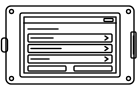
A Monero cold wallet you build yourself from a cheap ESP32-S3 touch board. Open source.
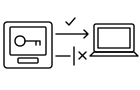
- Seed and spend key never leave the device.
- Signs the WHOLE Monero transaction on board.
- No soldering: flash the firmware and go.
Experimental, not audited yet.
THE BOARD
ESP32-S3: 16 MB flash, 8 MB PSRAM display and touch on one board.
Reference:
- ES3C28P 2.8" 320x240 touch microSD slot
Also works:
- Waveshare ESP32-S3 Touch-LCD-2, 2" touch microSD slot
Wi-Fi and Bluetooth are never compiled in.
WHY COLD
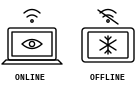
A hot wallet keeps its keys on a computer that is online.
ColdPunk splits the job:
- PC: WATCH-ONLY wallet. Sees the balance, builds and sends transactions.
- Device: keeps the keys and signs. Never online.
Malware on the PC can show you a wrong address - check every address on the DEVICE screen.
DISGUISE
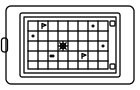
Optional disguise: at power-on the device is a Minesweeper game. Off by default - Settings.
- The wallet opens after a secret gesture and the password.
- Autolock: keys wiped, back to the start.
- Wrong passwords: delays up to 8 hours; 50 in a row erase the device.
A disguise. The password protects.
Use it with Feather, the Monero GUI and CLI
HOW IT WORKS
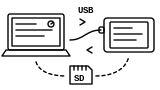
PC: view-only wallet
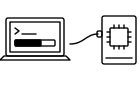
USB cable: MoneroPunkSigner (Feather fork).
microSD card: ANY wallet - Feather, Monero GUI or CLI.
Between them only files.
The device keeps the keys and signs. Every result needs a YES on the device screen.
YOUR WALLET
- Create a wallet or restore one from its seed.
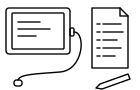
- Write the seed on PAPER.
- On the PC, MoneroPunkSigner: New wallet - Restore from keys - View only - ColdPunk button. Confirm on the device. No cable: the device writes <wallet>_viewonly.txt to the SD card for any wallet.
- Sync key images (next pages), then send and receive.
SEEDS
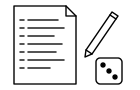
- 25-word Monero seed or 16-word Polyseed.
- Optional passphrase: a hidden 2nd wallet; every wallet can be asked.
- Dice can be the entropy if you do not trust the chip's RNG.
- Restores Feather and Cake / Cupcake passphrase seeds.
The seed on paper is the only backup. Lose it, lose the money.
SEE YOUR BALANCE
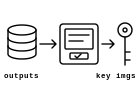
A watch-only wallet sees incoming money, but not what you spent. For that it needs KEY IMAGES.
- The PC wallet exports outputs.
- The device asks: "Generate key images for N outputs?"
- Yes - key images go back, the balance is right.
The device keeps a cache of them and refuses to sign twice with the same outputs.
SIGN
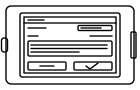
On the device screen:
- amount and fee
- every full address
- change: back to you?
Then SIGN. The device computes ALL of it:
- CLSAG ring signatures
- Bulletproofs+ range proof
With Ledger and Trezor the PC drives signing step by step.
SD CARD
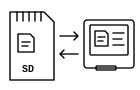
No cable? A microSD card (FAT32) works with ANY Monero wallet: Feather, monero-wallet-gui or -cli.
- View-only wallet: the device writes <wallet>_viewonly.txt.
- Outputs file in the card root -> key images.
- Unsigned tx -> signed tx next to it, after YES.
- Wallet menu - SD card files. Newest first, done ones marked.
MONERO CLI AND SD
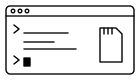
A view-only monero-wallet-cli works too. Create it with --generate-from-view-key and _viewonly.txt.
Files go to and from the card root.
Sync:
export_outputs w_outputs
import_key_images w_keyImages
Send:
transfer ADDRESS AMOUNT
- writes unsigned_monero_tx
submit_transfer
- reads signed_monero_tx
ON THE DEVICE
- Balance: an estimate from the synced outputs and what the device signed. Can be off.
- Transactions: all received, newest first; * signed here, ? what the device can't know.
- Check seed: type the phrase, the device says if it matches.
- Every wallet has its own network: mainnet, stagenet or testnet.
- Sync: "All saved key images" also sends the ones given out before.
Monero cold wallet FAQ
MONERO WALLET FAQ
What is a Monero cold wallet?
A Monero (XMR) wallet whose keys live on a device that is never online. ColdPunk is one you build yourself: a hardware wallet made from a cheap ESP32-S3 touch board.
Which PC wallets work with it?
MoneroPunkSigner over USB. With a microSD card: Feather, the Monero GUI and monero-wallet-cli, as a watch-only (view-only) wallet.
What does it cost?
The firmware is free and open source (MIT). You pay for the board.
LEDGER, TREZOR, BACKUP
ColdPunk or Ledger / Trezor?
They are audited products. ColdPunk is experimental, but open from the firmware up and signs the whole transaction itself (CLSAG, BP+).
Is it safe for my XMR?
Not audited yet. Start small; turn on secure boot for real value.
What if I lose the device?
Restore the seed in another wallet: Feather or Cake; a 25-word seed also in the Monero GUI and CLI.
Testnet and stagenet?
Yes: each wallet picks mainnet, stagenet or testnet.
About ColdPunk
           _     _
  ___ ___ | | __| |
 / __/ _ \| |/ _` |
| (_| (_) | | (_| |
 \___\___/|_|\__,_|
                           _
         _ __  _   _ _ __ | | __
        | '_ \| | | | '_ \| |/ /
        | |_) | |_| | | | |   <
        | .__/ \__,_|_| |_|_|\_\
        |_|
A hardware wallet should not need a factory, an account or trust in a company. A cheap board, open code and your own hands are enough.
- No account • No cloud • No Wi-Fi
SOURCE
Firmware: github.com/decolorized/ColdPunk
PC wallet (Feather fork): github.com/decolorized/ MoneroPunkSigner
Docs, security model and the USB protocol live in the repositories.
Found a bug or a hole? Open an issue - or a private security report for anything sensitive.